
Emergency Lighting
Emergency lighting installation and testing so escape routes stay lit and compliant if the power fails.
What it is
Emergency lighting provides illumination along escape routes and at exits if the normal lighting fails. We install maintained and non-maintained systems and carry out the periodic function and duration tests they need.
Who legally needs it
Required in most commercial premises, HMOs, communal areas of blocks of flats, and anywhere the public or employees need a safe escape route. The responsible person must ensure it's installed and regularly tested.
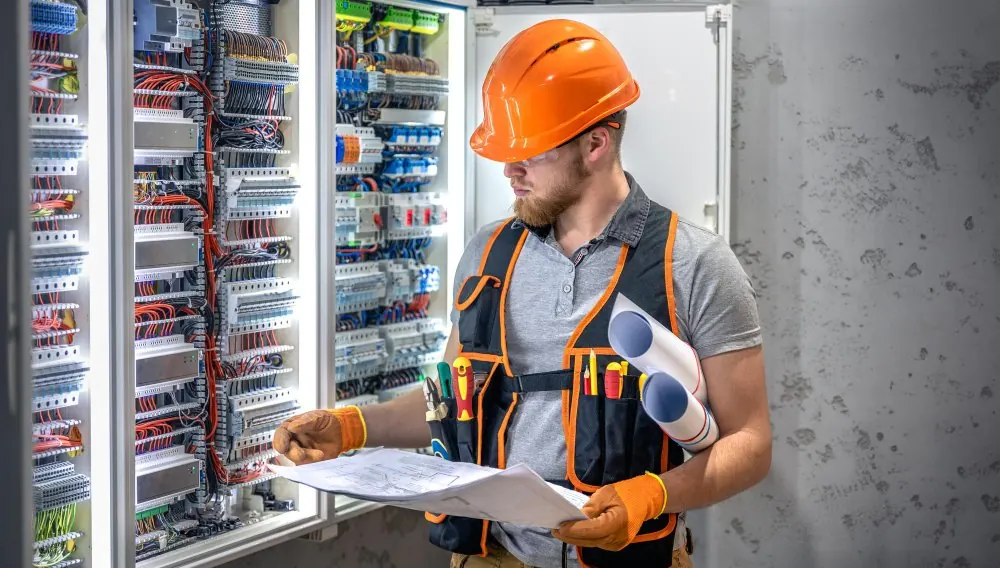
Emergency lighting is a legal requirement in most commercial premises, HMOs and the communal areas of blocks of flats. When the power fails it is the system that keeps escape routes lit, exits visible and people safe. We design, install, test and certify emergency lighting to BS 5266 — the British Standard that governs its performance and maintenance.
Who needs emergency lighting
- Landlords of HMOs — communal areas, hallways, stairwells and escape routes must stay lit if the mains supply fails
- Commercial premises — offices, shops, restaurants, pubs, warehouses and anywhere open to the public or employing staff
- Blocks of flats — communal corridors, stairwells and external escape routes
- Property managers and letting agents responsible for keeping managed buildings compliant
Under the Regulatory Reform (Fire Safety) Order 2005 the responsible person must ensure emergency routes and exits are adequately lit. A documented testing regime is how you prove it.
Monthly and annual tests — what BS 5266 requires
Monthly function test — a short test confirming each luminaire switches to battery power and illuminates correctly, just long enough to check the lamp lights. The result is recorded in your logbook.
Annual duration test — a full discharge test that runs the fittings on battery power for their rated duration, typically one or three hours. This verifies the batteries can genuinely sustain the lighting through a real power cut, and identifies any fitting due for replacement.
We can carry out both tests, keep the logbook up to date and issue certification on completion.
Maintained or non-maintained
Maintained fittings stay lit permanently and double as normal lighting, which suits areas that are occupied in low light such as function rooms. Non-maintained fittings only illuminate when the mains supply fails, which suits corridors and stairwells. Most buildings use a mix, and we specify each area at the survey.
What's included
- Escape route and exit lighting design to BS 5266
- Installation of maintained and non-maintained fittings and exit signs
- Monthly function and annual duration tests
- Test logbook kept up to date and certification issued
- Ongoing maintenance schedules with reminders before tests fall due
from £90
installation from £90 per point; testing quoted on site size
Every job is quoted exactly before work starts — no hidden extras. Tell us about your property and we'll confirm your exact price within one working day.
Get My Exact QuoteFrom booking to certificate, in four steps
Book a survey
We assess the property, identify the escape routes and design a system that meets BS 5266 and your fire risk assessment.
Installation
We supply and fit emergency fittings, exit signs and any central battery system, with full commissioning.
Certification
You receive a completion certificate confirming the installation meets the relevant standards.
Ongoing testing
We carry out the monthly and annual tests, maintain your logbook and remind you before anything lapses.
Emergency Lighting — your questions answered
Is emergency lighting a legal requirement?
For most non-domestic premises and the communal areas of residential buildings, yes. The Regulatory Reform (Fire Safety) Order 2005 requires escape routes to be adequately lit in the event of a power failure, and HMO landlords have specific duties under fire safety regulations.
What is the difference between maintained and non-maintained fittings?
Maintained fittings stay on permanently and double as normal lighting; non-maintained fittings only illuminate when the mains power fails. We advise on the right choice for each area of your property.
How often does emergency lighting need testing?
A monthly function test and an annual full-duration test, under BS 5266. Every result must be recorded in the logbook.
Can you test a system somebody else installed?
Yes. We take on testing for existing installations, record the results in your logbook and flag any fitting that no longer holds its rated duration.
Need Emergency Lighting?
Get an exact quote within one working day — and once the work is done, your certificate is stored in your customer portal.